The landscape of global manufacturing is undergoing a profound transformation as the demand for high-precision components continues to escalate. Modern production environments are no longer defined solely by mass output but by the integration of intelligence and adaptability. As global supply chains face increasing pressure to be more resilient, the role of advanced molding technologies becomes central to maintaining a competitive edge in various high-stakes sectors.
The Evolution of Plastic Injection Molding
Modern plastic injection molding has transitioned from a traditional craft into a data-driven science. Early iterations of the process focused on simple geometries and high-volume consistency, but the current era prioritizes complex architectures and material versatility. Manufacturers are now utilizing sophisticated software to predict how molten polymers behave within a tool, ensuring that internal stresses are minimized before a single piece of steel is cut.
In precision engineering, companies likeLZ Tooling manufacture plastic injection molding components for industries such as automotive, electronics, and general industrial equipment. This strategic focus allows for the development of parts that meet rigorous safety and performance standards while optimizing production timelines. By leveraging deep technical expertise, the entity helps bridge the gap between initial design concepts and market-ready physical products.
Strategic Applications in Automotive Components Manufacturing
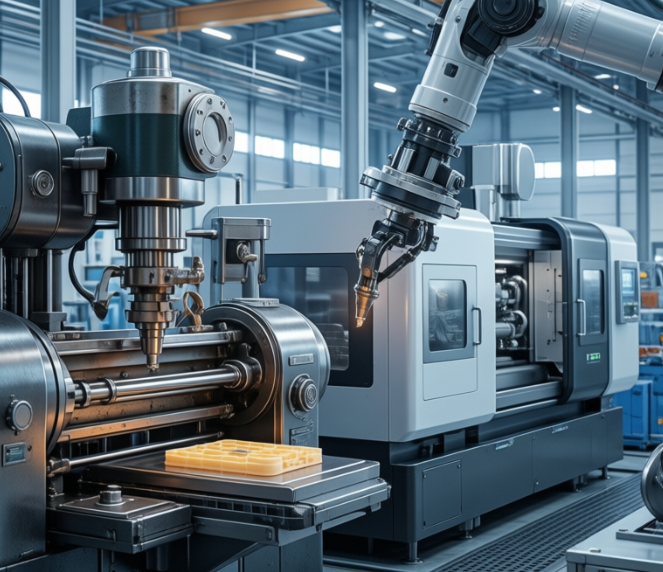
The automotive sector remains one of the primary drivers of innovation within the molding industry. As vehicles transition toward electrification, the need for lightweight materials has become a critical engineering objective for automotive components manufacturing. Reducing the weight of interior panels and structural housings directly correlates to improved battery range and overall vehicle efficiency.
Engineers are increasingly replacing heavy metal brackets with high-strength engineering plastics like PEEK and glass-filled Nylon. These materials offer exceptional heat resistance and mechanical strength while providing the design freedom necessary for modern aerodynamic aesthetics. This shift requires a deep understanding of thermal management and part consolidation to ensure long-term durability in harsh operating environments.
The Rise of Prototype Injection Molding
In the fast-paced consumer electronics and medical device markets, speed to market is often the deciding factor for success. Prototype injection molding serves as a vital phase, allowing designers to test functional parts in the actual production material rather than relying solely on 3D printing. This ensures that mechanical properties, such as snap-fit tension and surface finish, are accurately represented during the validation phase.
Typical lead times for these bridge-to-production tools have decreased from months to weeks. By utilizing aluminum or pre-hardened steel inserts, manufacturers can produce anywhere from 50 to 1,000 parts for rigorous testing. This iterative process reduces the risk of expensive failures during the final high-volume production launch, saving both capital and time.
Low Volume Production and Market Agility
The traditional mindset of “millions of units or nothing” is being replaced by the demand for low volume production. Many specialized industries, such as aerospace or high-end robotics, require limited runs of highly complex parts that do not justify the cost of multi-cavity hardened steel tools. Flexible tooling strategies allow for the production of 500 to 10,000 units with high efficiency.
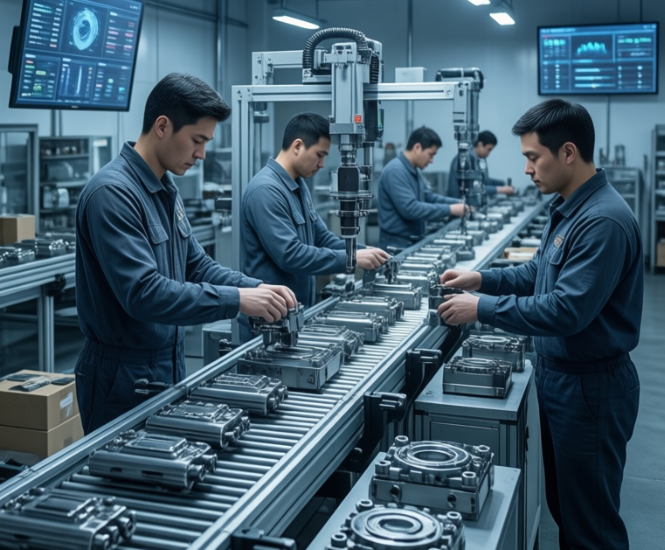
This approach offers significant advantages for startups and niche manufacturers who need to manage inventory levels and cash flow. By utilizing modular mold bases and interchangeable inserts, the cost of entry for new product development is lowered. This democratization of manufacturing allows smaller players to compete with established giants by bringing specialized solutions to market faster.
Engineering Excellence and Industry Benchmarks
While the industry is diverse, certain players have set high standards for speed and digital integration. For instance, Protolabs and PTI Engineered Plastics have demonstrated how automated quoting and rapid machining can revolutionize customer expectations. These organizations highlight the importance of transparency in the manufacturing process, providing real-time feedback on part manufacturability.
Competition among firms like Protolabs and Xometry drives the entire sector to adopt more robust digital twins and AI-driven quality control. By observing these industry leaders, smaller specialized firms can refine their internal workflows to offer similar levels of precision and reliability. The result is a more robust ecosystem where quality and speed are no longer mutually exclusive.
Material Science and High-Performance Polymers
The selection of materials is fundamental to the success of any injection molding project. Beyond standard resins like ABS and Polypropylene (PP), engineering-grade materials such as Polycarbonate (PC) and PMMA are essential for optical and structural applications. Each material possesses unique shrink rates and flow characteristics that must be accounted for during the mold design phase.
High-performance polymers like PEEK (Polyetheretherketone) are now common in medical and aerospace sectors due to their biocompatibility and chemical resistance. Processing these materials requires specialized heating systems and high-pressure injection units to maintain dimensional stability. Mastering these “exotic” materials allows manufacturers to provide solutions for the most demanding environments on Earth and beyond.
Advanced Tooling Components and Precision Design
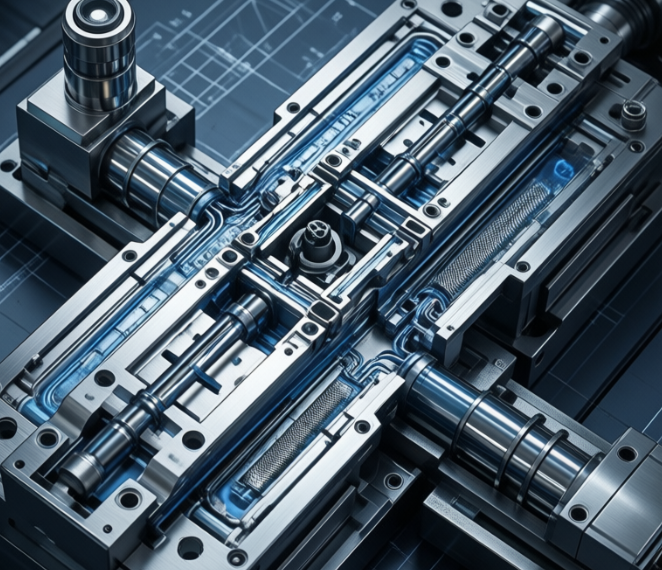
An injection mold is more than just a cavity; it is a complex thermal management system. Modern tools utilize conformal cooling channels, which are 3D-printed directly into the mold steel to follow the contour of the part. This technology can reduce cycle times by up to 30% while significantly improving part quality by preventing uneven cooling and warpage.
Precision components such as hot runner systems and specialized ejector pins also play a role in reducing material waste. By keeping the plastic molten in the runner system, manufacturers can eliminate the need for regrind, which is particularly important for high-purity medical applications. These technical refinements contribute to a more sustainable and cost-effective manufacturing process.
Achieving High-Quality Molded Parts
Quality assurance in injection molding involves a combination of real-time sensor data and post-production metrology. To consistently deliver high-quality molded parts, manufacturers monitor parameters such as injection pressure, melt temperature, and holding time for every single cycle. Any deviation from the established process window triggers an automatic rejection of the part.
Advanced inspection techniques, including Coordinate Measuring Machines (CMM) and 3D laser scanning, ensure that final dimensions are within tolerances as tight as ±0.05mm. This level of rigor is mandatory for components used in safety-critical systems, such as automotive braking units or surgical instruments. Documenting this data provides a traceable history that is often required for ISO and aerospace certifications.
Sustainability and the Circular Economy
The plastics industry is under increasing pressure to adopt more sustainable practices. This includes the integration of bio-based resins and the use of recycled content without compromising the mechanical integrity of the final part. Efficient mold design also plays a role by minimizing the amount of material required for runners and gates.
Energy-efficient all-electric molding machines are replacing older hydraulic models in many modern facilities. These machines provide better repeatability and lower noise levels while consuming significantly less power. As environmental regulations tighten, the ability to document a lower carbon footprint will become a primary differentiator for manufacturers worldwide.
Integration of Automation and Industry 4.0
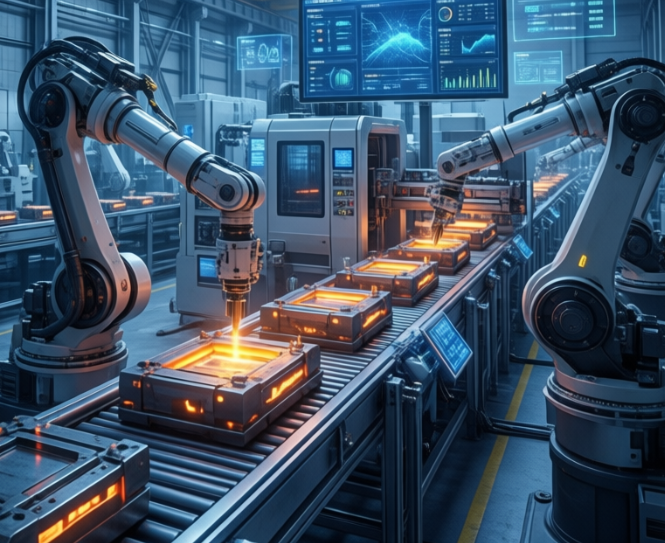
The modern shop floor is increasingly populated by six-axis robots and automated part-collection systems. Automation reduces human error and allows for continuous production during “lights-out” shifts. Integrating these systems with an Enterprise Resource Planning (ERP) platform enables real-time tracking of production metrics and maintenance schedules.
Predictive maintenance is another hallmark of Industry 4.0, where sensors on the mold and machine predict when a component is likely to fail. This proactive approach prevents unscheduled downtime and extends the life of expensive tooling assets. The result is a more stable supply chain and more predictable lead times for the end customer.
Global Market Dynamics and Supply Chain Resilience
In recent years, many companies have shifted toward “near-shoring” to reduce the risks associated with long-distance logistics. Having a manufacturing partner with local expertise and global standards is essential for maintaining a resilient supply chain. This trend has led to a renewed investment in regional manufacturing hubs that can respond quickly to local market shifts.
Collaboration between design teams and manufacturing engineers is becoming more integrated through cloud-based CAD/CAM platforms. This allows for seamless transitions between different stages of the product lifecycle, from initial concept to end-of-life recycling. Effective communication and technical transparency are the foundations of these long-term strategic partnerships.
The Role of Precision Tooling in Future Innovations
As we look toward the next decade, the convergence of AI, material science, and advanced robotics will continue to redefine the boundaries of what is possible. Precision tooling remains the “silent enabler” of modern technology, providing the physical housing and structural components for the devices we use every day. Without the ability to mold plastic with micron-level accuracy, the modern world would look very different.
Enterprises that prioritize engineering depth and technical agility will be the ones to lead this new era. By focusing on solve-complex challenges rather than just producing parts, these manufacturers become true strategic partners in innovation. The future of the industry lies in the balance of traditional mechanical excellence and cutting-edge digital intelligence.
Conclusion: Navigating the Complexities of Modern Molding
Choosing a manufacturing partner requires an evaluation of both technical capacity and the ability to maintain consistency across varying production scales. Whether handling low volume production or large-scale industrial projects, the focus must remain on delivering value through precision and material expertise. The evolution of the sector suggests that success is found where traditional craftsmanship meets digital innovation.
Manufacturers like PTI Engineered Plastics, LZ Tooling, and Xometry continue to push the envelope, ensuring that the global market has access to the parts it needs. For those seeking a reliable foundation in the industry, the choice often comes down to who can most effectively navigate the complexities of modern engineering.