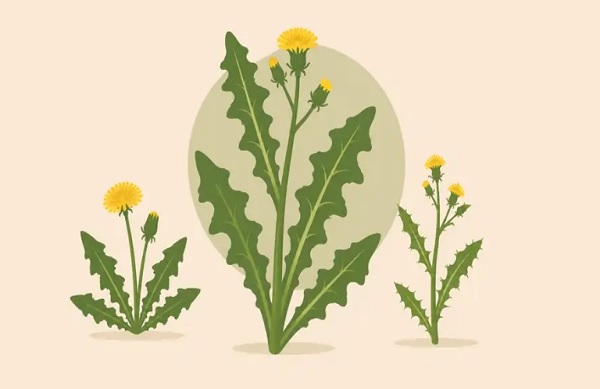
Wild Lettuce Look-Alikes confuse beginners because many common weeds share the same easy-to-notice clues. Yellow flowers, jagged leaves, rosette growth, tall stems, and white milky sap can all appear in plants that are not the same species. A beginner may see one or two matching signs and feel confident too soon.
The problem is not that wild lettuce is impossible to recognize. The problem is that quick internet clues often skip plant family context, growth stage, flower structure, stem details, leaf arrangement, and location. Secrets Of The Tribe treats this as identification literacy: a look-alike warning should slow the buyer down, not encourage casual self-foraging.
This article does not provide medical advice or foraging instructions. Wild lettuce tinctures, extracts, powders, teas, capsules, dried herbs, and supplements are not intended for medical diagnosis, medical care, pain care, sleep care, mental health care, emergency use, or replacement of professional support. Do not collect or use wild plants based on this article. If you are under 18, pregnant or breastfeeding, taking medication, using alcohol or sedating substances, preparing for surgery, or managing a health condition, ask a qualified healthcare professional before using wild lettuce products.
Why Are Wild Lettuce Look-Alikes So Common?
Wild lettuce has many look-alikes because it belongs to the Asteraceae family, a large plant family that includes dandelion, sow thistle, chicory, prickly lettuce, and many yellow-flowered weeds.
Plants in this family can share traits such as composite flower heads, milky sap, toothed leaves, and rosette growth. These shared traits make quick identification risky.
A family resemblance is not a species match.
Why Yellow Flowers Are Not Enough
Yellow flowers are one of the weakest clues for identifying wild lettuce.
Dandelion, sow thistle, prickly lettuce, cat’s ear, hawksbeard, hawkweed, and several Lactuca species can all produce yellow composite flowers. Flower color tells you almost nothing by itself.
Beginners often overvalue yellow blooms because they are visible. Good identification uses multiple features at the same time.
Why Milky Sap Is Not Enough
Milky sap is another common trap. Wild lettuce can release white latex-like sap when the stem or leaf tissue is damaged, but many other plants do this too.
Dandelion and sow thistle can also show milky sap. Some unrelated plants produce white latex as well.
White sap is a clue, not confirmation. It does not prove identity, safety, quality, or suitability for use.
Why Rosette Leaves Confuse Beginners
A rosette is a circle or cluster of leaves that grows close to the ground. Many plants start with a rosette before they send up a taller flowering stem.
Wild lettuce, dandelion, sow thistle, prickly lettuce, and other weeds can show rosette-like stages. Young plants can be especially confusing because the tall stem and mature flower features may not be present yet.
Growth stage can make two different plants look more similar than they are.
Quick Comparison of Common Wild Lettuce Look-Alikes
| Plant | Why Beginners Confuse It | Why One Clue Is Not Enough |
|---|---|---|
| Wild lettuce | Yellow flowers, milky sap, tall growth, lobed leaves | Several related weeds share these traits |
| Dandelion | Yellow flower heads, rosette leaves, milky sap | Flower stem and leaf pattern need closer review |
| Sow thistle | Yellow flowers, milky sap, soft prickly-looking leaves | Leaf clasping and flower clusters can differ |
| Prickly lettuce | Close Lactuca relative, milky sap, prickly midrib | Often closer to wild lettuce than dandelion is |
| Hawksbeard or hawkweed | Yellow composite flowers and weed-like growth | Flower structure and leaf arrangement differ |
How Dandelion Confuses Wild Lettuce Beginners
Dandelion confuses beginners because it has yellow composite flowers, lobed leaves, a ground-level rosette, and white milky sap.
That list sounds close to wild lettuce, but dandelion is usually a low-growing plant with a hollow leafless flower stalk and a familiar single flower head. Wild lettuce often grows taller and develops a branching stem with smaller flower heads.
Still, beginners should not rely on a short feature list. Photos from one season or region can mislead.
How Sow Thistle Confuses Wild Lettuce Beginners
Sow thistle can look closer to wild lettuce than dandelion does. It may grow tall, produce yellow flower heads, release milky sap, and show leaves that look toothed, lobed, or prickly.
Some sow thistle leaves clasp the stem. Some feel softer than they look. Flower heads may appear in clusters. These details can vary by species and growth stage.
For beginners, sow thistle is a strong reason not to identify wild lettuce from one feature.
Why Prickly Lettuce Is a Special Case
Prickly lettuce is especially confusing because it is a Lactuca species and a close botanical relative of wild lettuce.
It can have milky sap, yellow flowers, a tall stem, and prickles along the leaf midrib. It may grow in disturbed soil, roadsides, fields, and urban edges.
Because it is closely related, the comparison can be more subtle than dandelion vs wild lettuce. This is where beginner confidence often fails.
Wild Lettuce vs Dandelion vs Sow Thistle
| Feature | Wild Lettuce | Dandelion | Sow Thistle |
|---|---|---|---|
| Plant family | Asteraceae | Asteraceae | Asteraceae |
| Flower color | Usually yellow | Yellow | Usually yellow |
| Milky sap | Can be present | Can be present | Can be present |
| Beginner trap | Looks like several weeds at early stages | Familiar yellow flower creates false confidence | Similar height and leaf style can mislead |
| Safe takeaway | Do not identify from one sign | Do not treat as proof of wild lettuce | Do not assume it is the same plant |
Why Leaf Shape Is Harder Than It Looks
Leaf shape changes by species, plant age, growing conditions, and position on the plant. Lower leaves can look different from upper leaves. Young leaves can look different from mature leaves.
Many Asteraceae weeds have jagged, lobed, toothed, or wavy leaves. Beginners may see a “wild-looking” leaf and stop checking.
Leaf shape helps only when combined with stem, flower, sap, growth habit, and expert confirmation.
Why Flower Structure Matters More Than Flower Color
Flower color is simple. Flower structure is more useful.
Many look-alikes have yellow flower heads, but the size, number, arrangement, branching pattern, bracts, and seed head details can differ. A single large dandelion flower head is not the same as a branching cluster of smaller heads.
Even then, flower structure requires careful observation and reliable field references.
Why Stem Details Matter
Stem details can separate plants that look similar from a distance.
Some plants have hollow leafless flower stalks. Some have branching stems. Some have prickles. Some have leaves clasping the stem. Some have ridges, hairs, or smooth surfaces.
These details are easy to miss in casual photos and quick videos.
Why Growth Stage Changes Everything
A plant in its rosette stage may look very different from the same plant after it bolts and flowers.
Beginners often compare a young plant to a photo of a mature plant, or a flowering plant to a rosette-stage guide. That creates mismatch and false confidence.
Wild Lettuce Look-Alikes are hardest when plants are young, damaged, or not flowering.
Why Location Is Not Proof
Wild lettuce and its look-alikes can grow in disturbed soils, edges, fields, lawns, roadsides, gardens, empty lots, and urban spaces.
Habitat can support an identification, but it cannot confirm it alone. A plant growing in the “right” place may still be the wrong plant.
Roadside and urban plants also raise contamination concerns.
Why Self-Foraging Can Be Risky
Self-foraging can be risky because plant identification errors are common among beginners. Contamination can also matter. Plants may grow near roads, sprayed areas, polluted soil, animal waste, or industrial runoff.
Wild plant use also creates uncertainty around plant part, freshness, concentration, and personal health context.
This article explains confusion points. It does not recommend collecting or using wild plants.
Why Online Photo Matching Is Not Enough
Photo matching can help you ask better questions, but it should not be your final authority.
Plant apps, search images, and social media comments can miss key details. Lighting, angle, damaged leaves, local variation, and incomplete photos can all mislead.
If identification matters for safety, use expert confirmation.
Why Milky Sap Should Not Lead to Taste Testing
Do not taste unknown plant sap. Taste is not a safe identification test.
Some plant sap can irritate the mouth, skin, or eyes. Even if a plant is correctly identified, tasting it does not prove that it is appropriate for use.
Seeing sap should make you more cautious, not more experimental.
Why Finished Products Need Different Questions
A finished wild lettuce product should be evaluated by its label, not by backyard plant guesses.
Look for botanical name, plant part, format, serving size, extraction base, warnings, storage directions, lot number, and expiration date. A supplement label should provide more reliable product information than a casual plant photo.
Secrets Of The Tribe takes a cautious editorial stance here: the safest buyer starts with clear labeling, not self-collected plant material.
What to Check on a Wild Lettuce Product Label
Check whether the label identifies Lactuca virosa or another specific Lactuca species. The common name alone is not enough.
Then check plant part. Look for aerial parts, leaf, stem, whole herb, extract, tincture, dried herb, powder, or blend details.
Finally, read warnings related to age, pregnancy, breastfeeding, medication, alcohol, sedating substances, surgery, allergies, and health conditions.
Wild Lettuce Look-Alikes Checklist
Use this checklist when a plant looks like wild lettuce because of yellow flowers, jagged leaves, rosette growth, or milky sap. The goal is caution, not self-foraging confidence.
Do Not Trust One Clue
Yellow flowers, milky sap, or jagged leaves cannot confirm wild lettuce by themselves.
Check the Plant Family Context
Many Asteraceae weeds share similar flower and sap traits.
Compare Growth Stage
A young rosette can look very different from a mature flowering plant.
Look Beyond Flower Color
Flower size, number, branching, and arrangement matter more than yellow color alone.
Study Stem Details
Branching, prickles, hollowness, leaf attachment, and surface texture can change the identification.
Avoid Taste Testing
Do not taste sap, leaves, stems, or flowers from an unknown wild plant.
Question Roadside Plants
Plants near roads, sprayed areas, or polluted soil may carry contamination concerns.
Use Expert Confirmation
When identification affects safety, ask a trained botanist, local extension office, or qualified plant expert.
Use Labels for Products
For supplements, rely on botanical name, plant part, format, and warnings instead of self-collected plant guesses.
Common Mistakes to Avoid
Thinking Yellow Flower Means Wild Lettuce
Many weeds have yellow composite flowers.
Thinking Milky Sap Confirms the Plant
Dandelion, sow thistle, and other plants can also produce white sap.
Ignoring Prickly Lettuce
Prickly lettuce can be a closer look-alike because it is also a Lactuca species.
Using Social Media as Final Proof
Photo comments and plant apps can miss key identification details.
Foraging for Supplement Use
Wild collection can involve misidentification, contamination, and unknown plant strength.
FAQ
What are common wild lettuce look-alikes?
Common look-alikes include dandelion, sow thistle, prickly lettuce, hawksbeard, hawkweed, and other Asteraceae weeds.
Does milky sap mean a plant is wild lettuce?
No. Many plants produce milky sap, including dandelion and sow thistle.
Does a yellow flower mean wild lettuce?
No. Yellow composite flowers are common in many Asteraceae plants.
Why does dandelion confuse beginners?
Dandelion has yellow flowers, rosette leaves, and milky sap, but it is not wild lettuce.
Why does sow thistle confuse beginners?
Sow thistle can grow tall, produce yellow flowers, release milky sap, and have toothed leaves.
Is prickly lettuce the same as wild lettuce?
No. Prickly lettuce is a related Lactuca species, but it should not be assumed to be the same plant.
Can I identify wild lettuce from a phone app?
Do not rely on a phone app alone. Use expert confirmation when identification affects safety.
Should I taste the sap to identify wild lettuce?
No. Do not taste unknown wild plant sap or use taste as an identification test.
Is this article a foraging guide?
No. This article explains look-alike confusion and cautions against self-foraging assumptions.
Glossary
Wild Lettuce
A common name for wild Lactuca species used in botanical supplement contexts.
Look-Alike
A plant that resembles another plant closely enough to confuse beginners.
Dandelion
A common Asteraceae plant with yellow flowers, rosette leaves, and milky sap.
Sow Thistle
A group of Asteraceae plants that can have yellow flowers, milky sap, and toothed leaves.
Prickly Lettuce
A Lactuca species that can resemble wild lettuce and may have prickles along the leaf midrib.
Asteraceae
The plant family that includes lettuce, dandelion, sow thistle, chicory, chamomile, and many other plants.
Rosette
A low cluster of leaves growing in a circular pattern near the ground.
Milky Sap
A white latex-like plant fluid released by some plants when tissue is damaged.
Botanical Name
The scientific name that identifies a plant more precisely than a common name.
Plant Part
The part of a plant used in a product, such as leaf, stem, aerial parts, whole herb, or extract.
Conclusion
Wild Lettuce Look-Alikes show why one clue is never enough. Yellow flowers, rosette leaves, and milky sap can point to several plants, so beginners should avoid self-foraging assumptions and rely on expert identification or clear supplement labels.
Sources
Wild lettuce species overview and Lactuca virosa identity, Lactuca virosa — en.wikipedia.org/wiki/Lactuca_virosa
Prickly lettuce identification and weed profile, Prickly Lettuce — ipm.ucanr.edu/PMG/WEEDS/prickly_lettuce.html
Sow thistle weed identification and plant features, Sowthistles — ipm.ucanr.edu/PMG/WEEDS/sowthistles.html
Dandelion plant identification and weed profile, Dandelion — ipm.ucanr.edu/PMG/WEEDS/dandelion.html
Asteraceae family overview and composite flower context, Asteraceae — britannica.com/plant/Asteraceae
Wild lettuce toxicity case report, Wild lettuce toxicity — pmc.ncbi.nlm.nih.gov/articles/PMC3031874
Wild lettuce safety and supplement context overview, Wild Lettuce: Is it Safe, and Does it Work? — webmd.com/diet/what-is-wild-lettuce
Dietary and herbal supplement safety overview, Dietary and Herbal Supplements — nccih.nih.gov/health/dietary-and-herbal-supplements
Dietary supplement consumer guidance and Supplement Facts label basics, Questions and Answers on Dietary Supplements — fda.gov/food/information-consumers-using-dietary-supplements/questions-and-answers-dietary-supplements